
A fresh finish can catch a tenant’s eye, but rental readiness starts with a property that works as intended. For investment property renovation Dubai investors should prioritise the unit’s condition and intended tenant before committing to premium upgrades. A functional kitchen, properly working building services and durable finishes may matter more than decorative details that add complexity without addressing a practical need.
Choosing the right improvements takes more than selecting attractive finishes. Design choices, MEP work and custom joinery need to work together, and decisions made in isolation can lead to rework or an inconsistent result. The right scope depends on the home, its existing condition and how you plan to rent it.
This guide explains how to set renovation priorities around tenant needs and property requirements, then coordinate finishes, kitchens, wardrobes, carpentry and MEP work within a practical plan. You’ll learn how to assess the property, define a clear scope and organise the next steps so each decision supports a considered, rental-ready outcome.
Key Takeaways
- Set the project objective first. Preparing a rental, repositioning the property and improving it for personal use call for different scopes.
- Assess MEP repairs, kitchens, wardrobes, paint, flooring and lighting against the property’s condition instead of applying a one-size-fits-all priority list.
- Compare maintenance-led, targeted and broader renovation scopes by their purpose, disruption and coordination needs, not by assumed returns.
- Plan an investment property renovation Dubai project in stages, and verify the current requirements that apply to the specific building.
- Review the scope before execution to align work items, specifications, trade coordination and handover expectations.
Investment Property Renovation in Dubai: Start With the Asset’s Purpose
A renovation for a long-term tenant has different priorities from one for furnished accommodation, resale preparation or owner use. Before selecting finishes or planning joinery, decide what the property needs to support. That objective gives each work item a clear purpose and helps prevent decorative choices from taking priority over practical repairs.
Investment decisions depend on more than how a room looks. The property’s condition, layout, location and building context all shape how it may suit an intended occupier. A compact apartment, for example, may benefit more from well-planned storage and a functional kitchen than from elaborate decorative detailing. For a broader grounding in factors that influence property investment decisions, consult Real Estate Investing Principles.
Define the Dubai property’s intended use before planning works
Long-term residential rental, furnished accommodation and eventual resale each involve different practical and presentation considerations. A furnished home may need useful storage and coordinated furniture; a long-term rental may call for resilient surfaces that are straightforward to maintain. Resale preparation may focus on a consistent, well-kept appearance, while owner-use improvements can reflect more personal preferences.
Translate the objective into a short property brief. Record what works, what limits the space and what needs maintenance. Note the unit layout, kitchen and wardrobe capacity, visible wear and the building’s character. Consider how the location and unit type may shape occupier expectations, but treat those expectations as questions to investigate, not proof that a particular upgrade will command higher rent or resale value.
Set renovation priorities from condition to presentation
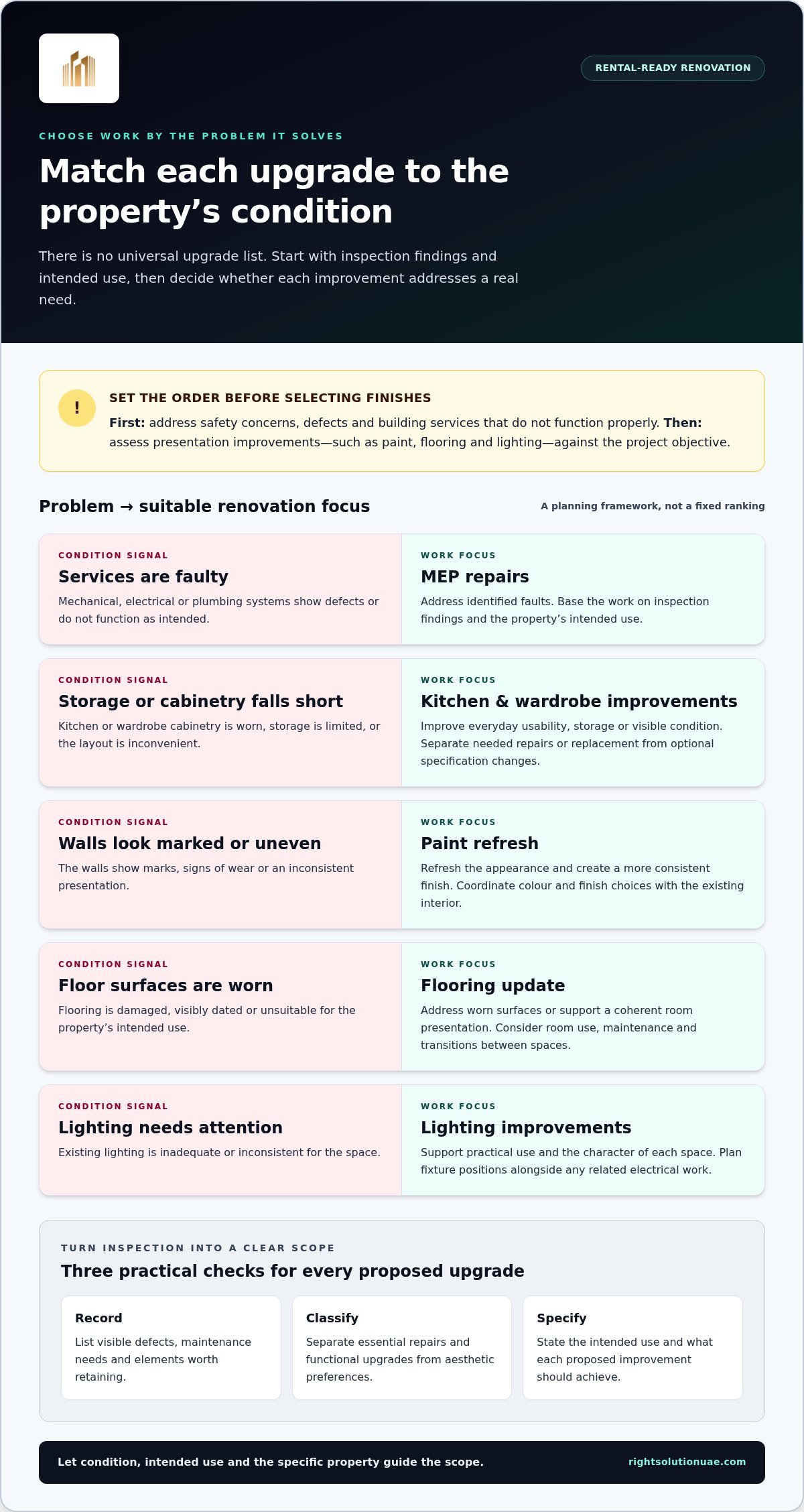
Assess the property in a practical order. Address safety concerns, defects and building services that don’t function properly before committing to discretionary finishes. MEP work, appliance fixing or carpentry may be appropriate where an inspection identifies a specific issue. Once essential needs are clear, assess presentation improvements such as paint, flooring, lighting, kitchen updates or customized storage against the project objective.
- Record: List visible defects, maintenance needs and elements worth retaining.
- Classify: Separate essential repairs and functional upgrades from aesthetic preferences.
- Specify: Note the intended use and what each proposed improvement should achieve.
For a frequently occupied property, durable, easy-to-maintain finishes can be a practical choice. The right selection depends on the room, existing condition and overall scope. Coordinating finishes with joinery and building services also helps the completed space feel considered rather than assembled from unrelated decisions.
Investment-focused renovation is purpose-led work shaped by the property’s condition and intended use, not a guarantee of rental or resale returns. A clear brief helps investors make measured choices before developing the detailed scope. It’s a useful starting point for an investment property renovation Dubai plan that balances function and presentation without assuming every upgrade will deliver a financial gain.
Which Renovation Upgrades Matter Most for a Dubai Investment Property?
There is no universal upgrade list for an investment property. A sound apartment with dated finishes needs a different scope from a unit with faulty services, worn joinery or a layout that doesn’t suit its intended occupier. Start with inspection findings, intended use and the condition of existing features. Then assess each proposed improvement by the problem it solves.
The table is a planning framework, not a fixed ranking. A property’s location, building context, layout and intended tenant can all affect what deserves attention. For wider property ownership and regulatory information, the Dubai Land Department website provides an official reference. Renovation decisions should still reflect the specific unit and its requirements.
| Upgrade | Purpose | Suitable property condition | Planning consideration |
|---|---|---|---|
| MEP repairs | Address faults in mechanical, electrical or plumbing systems. | Services show defects or don’t function as intended. | Base work on inspection findings and the property’s intended use. |
| Kitchen and wardrobe improvements | Improve everyday usability, storage and visible condition. | Cabinetry is worn, storage is limited or the layout is inconvenient. | Separate necessary repairs or replacement from optional specification changes. |
| Paint | Refresh the appearance and create a more consistent finish. | Walls show marks, uneven presentation or signs of wear. | Coordinate colour and finish choices with the existing interior. |
| Flooring | Address worn surfaces or support a coherent room presentation. | Flooring is damaged, visibly dated or unsuitable for the intended use. | Consider room use, maintenance and transitions between spaces. |
| Lighting | Support practical use and the character of each space. | Existing lighting is inadequate, inconsistent or needs attention. | Plan fixture positions and any related electrical work together. |
| Glass, aluminium and custom furniture | Refine space use, fit and visual coherence. | Existing elements don’t suit the layout or intended function. | Compare tailored dimensions and storage needs with simpler alternatives. |
Prioritise MEP, kitchens and storage for everyday function
MEP work should respond to the actual condition of the systems, not an assumption that they need upgrading. A fault that affects safe or reliable use deserves attention before optional improvements. For kitchens and wardrobes, identify whether the issue is damage, insufficient storage, awkward access or simply a preference for a different look. Repairing or replacing worn components is a different decision from choosing a higher specification for aesthetic reasons.
Choose finishes and furniture for durability and appeal
Paint, flooring, glass and aluminium finishes, and furniture choices should reflect how the property will be occupied and maintained. Bespoke joinery can make use of a specific alcove or add storage to a particular layout; a simpler standardised solution may suit a more straightforward requirement. Compare fit, function and design coherence rather than assuming one approach is always better. Reliable function and visual presentation serve different purposes, and a considered scope accounts for both.
For an investment property renovation Dubai project, connect every proposed upgrade to a condition, use or presentation need, without assuming it will increase rent or resale value. Coordinating MEP work, joinery and finishes within one defined scope helps keep decisions aligned. A tailored renovation and fit-out plan can bring those elements together around the property’s intended use.
How to Compare Renovation Scopes Without Assuming a Return
Once the property’s needs are clear, compare possible scopes by purpose, disruption and coordination, not by a promised financial outcome. A maintenance-led scope addresses defects and essential repairs. A targeted refresh updates selected areas, such as paint, flooring or storage. A broader renovation may involve several rooms, MEP work, joinery and finishes, with more trades and decisions to coordinate.
These options aren’t interchangeable. A sound property with dated presentation may suit a focused refresh, while a unit with service faults and worn cabinetry may need coordinated repairs before cosmetic work makes sense. Costs and outcomes depend on site condition, selected materials and the defined scope. For an investment property renovation Dubai project, treat any financial projection as a separate assessment, not a renovation promise.
- Maintenance-led: Correct identified defects and restore essential function. Work may be focused, but access to affected areas and the repair sequence still need planning.
- Targeted refresh: Improve selected finishes or joinery while retaining sound elements. Keep the scope focused, while ensuring new design choices work with the existing property.
- Broader renovation: Coordinate several work categories across the property. This involves more decisions, trade interfaces and sequencing considerations.
Match the scope to property condition and tenant expectations
Consider two illustrative cases. In one, services and cabinetry are in good order, but paint and flooring show wear. A targeted refresh may suit the property’s condition and intended occupier. In another, a kitchen update may overlap with electrical or plumbing repairs. Including those items in one coordinated scope helps prevent planning them in isolation.
Occupancy plans also shape the practical approach. If the property is vacant, more areas may be accessible for work; if a handover date is approaching, the scope and sequence need to account for that constraint. Define what must be complete before occupation and which optional improvements can wait. These examples help structure decisions, but don’t establish demand or likely returns for a particular Dubai area or property type.
Assess coordination, specification and exclusions
Design decisions can affect MEP work, carpentry and finishing. For example, changing kitchen storage may affect joinery dimensions and service positions, while a new finish may require preparation that should be described in the scope. Drawings, selected finishes and clear work descriptions give each item a reference point. Record exclusions and assumptions too, including any areas or items that will remain unchanged.
Right Solution Contracting LLC coordinates design, planning and execution across relevant fit-out trades, bringing MEP, carpentry and finishes into a project-based scope. A written review can clarify included work, specifications, exclusions and handover expectations before work begins. Projected rental or resale outcomes should never be presented as guaranteed results of renovation. The goal is a defined, coordinated project that addresses the property’s needs without confusing improved condition with a certain financial return.
Plan a Dubai Investment Property Renovation in a Clear Sequence
A clear sequence connects the property objective to the finished space and makes dependencies easier to plan. Measurements inform joinery, MEP decisions affect layouts, and finish selections need to be settled before installation. For an investment property renovation Dubai owners can use this framework to organise decisions, responsibilities and handover without assuming every building follows the same process.
Prepare the brief, site information and project scope
Begin with a concise brief that states the intended occupancy, priority rooms, known defects and expected condition at completion. A site assessment can then confirm dimensions, existing conditions and points where trades or finishes intersect. Mark which decisions are settled and which depend on inspection findings or building requirements. This gives the project a clear basis without treating assumptions as confirmed work.
- Define the objective. State whether the property is being prepared for rental, repositioned or improved for another use. Describe the practical needs the renovation should address.
- Record site information. Measure rooms and note existing finishes, joinery, visible defects and service locations. Identify areas that should remain untouched as well as those requiring attention.
- Check property-specific requirements. Building permissions, access arrangements and work requirements can vary. Verify current Dubai requirements that apply to the property and establish any relevant approvals before setting the execution sequence.
- Define scope and specifications. Describe each work item, selected finishes and the intended completion condition. Note exclusions and assumptions, including items that may change after inspection or review of building requirements.
- Coordinate design and execution. Align drawings, measurements, finish choices and MEP requirements before work begins. Plan dependencies so service-related work is addressed before joinery or final finishes cover it.
- Inspect and hand over. Review completed items against the agreed scope, document outstanding work and record the final condition for the property’s next use.
Coordinate execution and handover in Dubai
Trade sequencing should reflect the actual scope. Where required, coordinate MEP work before closing walls or fitting joinery. Then align carpentry, kitchen or wardrobe installation, glass or aluminium work and finishes with the plan. Confirm building access and working arrangements for the specific project. At handover, record completed work, outstanding items and relevant finish or maintenance information for the property file.
A written scope and site information help keep design, planning and execution connected. Right Solution Contracting LLC coordinates relevant renovation and fit-out work, including MEP, carpentry and finishes, within a defined project. The company has been working on residential and commercial projects in the UAE since 2005.
Once the objective, site condition and sequence are clear, the next step is to shape them into a coordinated scope. Plan your Dubai property renovation with a defined brief and aligned work stages.
Choose a Renovation Partner and Move Your Dubai Property Forward
A well-defined brief gives the property owner and renovation team a shared basis for planning. Before work begins, review whether the proposed scope matches the property’s intended use, condition and handover needs. Clarify what will be done, how related trades will be coordinated and what the completed work should look like.
What a clear project brief should contain
Include the details that turn an investment property renovation Dubai project from a general idea into a workable scope. A concise brief should identify:
- Property details: Type and location, intended use, occupancy plans and current condition.
- Priority improvements: Rooms and specific issues requiring attention, with essential repairs distinguished from optional upgrades.
- Work items: The requested MEP, kitchen, wardrobe, carpentry, furniture or finishing work, described as clearly as possible.
- Specifications: Preferred materials and finishes, along with design details that can be developed to suit the property.
- Project considerations: Access arrangements, occupancy, anticipated handover needs and building coordination requirements.
This information helps the project team understand the desired outcome and the constraints around the work. During scope review, check that each item has a clear description, relevant specifications and an identified relationship to other work. For example, kitchen joinery, electrical points and finish selections should be considered together where they affect one another. Confirm what is included, what is excluded and which decisions remain subject to site assessment or building requirements.
How Right Solution Contracting LLC can support the renovation
Right Solution Contracting LLC provides interior and exterior fit-out and renovation services in Dubai for residential and commercial projects. Operating since 2005, the company coordinates design, planning and execution. A project-based approach can bring relevant work into one defined scope, aligning MEP requirements with carpentry, kitchen and wardrobe improvements, customized furniture and finishing.
Coordination matters because choices in one area can affect another. Measurements inform joinery, service locations may influence kitchen layouts, and finish selections need to work with the installation sequence. A coordinated plan makes these dependencies visible early and gives the team and property owner a shared reference as the work progresses.
Before proceeding, review the brief against five points: objectives, work items, specifications, coordination and handover. Confirm that the scope reflects the property’s condition and intended use, and that handover expectations are clear. This supports informed project decisions without treating renovation as a promise of rental or resale returns.
To discuss an investment property renovation, share your property type, current condition and priority improvements with the project team.
Turn Your Renovation Priorities Into a Clear Brief
The next step is to turn ideas into decisions. A focused brief translates your property’s intended use into a practical scope, giving each proposed improvement a clear reason and helping the project start with aligned expectations.
For an investment property renovation Dubai project, keep the brief grounded in what the property needs now and how it will be used next. Set out the priority work, note the desired finish and identify details that still depend on site assessment. This gives the planning conversation a useful starting point without treating renovation as a promise of financial returns.
Right Solution Contracting LLC can shape that brief into a coordinated renovation and fit-out plan, bringing relevant work together around your property’s requirements. Discuss your Dubai investment property renovation with the project team to take the next step with a clear scope.
Frequently Asked Questions
Is renovating an investment property in Dubai worth it?
It can be worthwhile when the work addresses a clear property need, but the decision depends on the asset and your plans for it. An investment property renovation Dubai project may make sense if unresolved maintenance issues could affect occupancy or if the layout no longer suits the intended use. Compare the proposed scope with the property’s condition and planned holding strategy, rather than treating renovation as an automatic route to higher income.
Which renovations should I prioritise in a Dubai rental property?
Start by addressing defects that affect safe, reliable use, then consider improvements that solve practical issues for the intended tenant. For example, if a unit has limited storage but its services are functioning well, storage improvements may be more relevant than changing sound building systems. Check frequently used areas and avoid choosing upgrades solely because they are fashionable or visually striking.
How long does an investment property renovation in Dubai take?
There isn’t one reliable duration for every project. The timeline depends on the amount of work, site conditions, approvals, access arrangements and coordination of materials and trades. Custom joinery or changes involving building services can create dependencies that affect sequencing. Before work starts, request a project schedule showing key stages, decision deadlines and handover activities, then account for building-specific working arrangements.
Can renovation guarantee higher rent or resale value in Dubai?
No. Renovation cannot guarantee higher rent or resale value. These outcomes depend on factors beyond the work itself, including the property’s location, condition, comparable listings and market circumstances at the time. A renovation can address defects or improve usability, but those changes don’t establish a particular financial result. Assess the scope on its practical merits and treat any rental or resale projection as an estimate, not a promised outcome.
What should an investment property renovation scope include?
A useful scope identifies the areas to be renovated and describes the work in enough detail to guide execution. Include drawings or measurements where relevant, finish selections, the extent of any MEP or joinery work, and items expressly excluded. Note assumptions that could change after inspection, along with access arrangements and the expected handover condition. This makes it easier to compare the planned work with what is completed.
Do Dubai investment property renovations require building approval?
Work beyond simple cosmetic painting generally requires permits from the relevant authority, and requirements depend on the building and project location. Dubai Municipality, Trakhees or the Dubai Development Authority may govern different areas. A developer or owners’ association no-objection certificate may also be needed before a permit application. Establish which approvals apply to the specific property before scheduling work, especially if the scope affects services or permanent fixtures.
Can one contractor coordinate MEP and interior renovation work?
Yes. An integrated contractor can coordinate MEP work with interior fit-out trades within a defined project scope. This is useful when electrical or plumbing work needs to align with kitchen layouts, carpentry or finishing stages. Set out responsibilities, specifications and the order of work at the start so trade interfaces are clear. Right Solution Contracting LLC coordinates renovation and fit-out projects across design, planning and execution.