
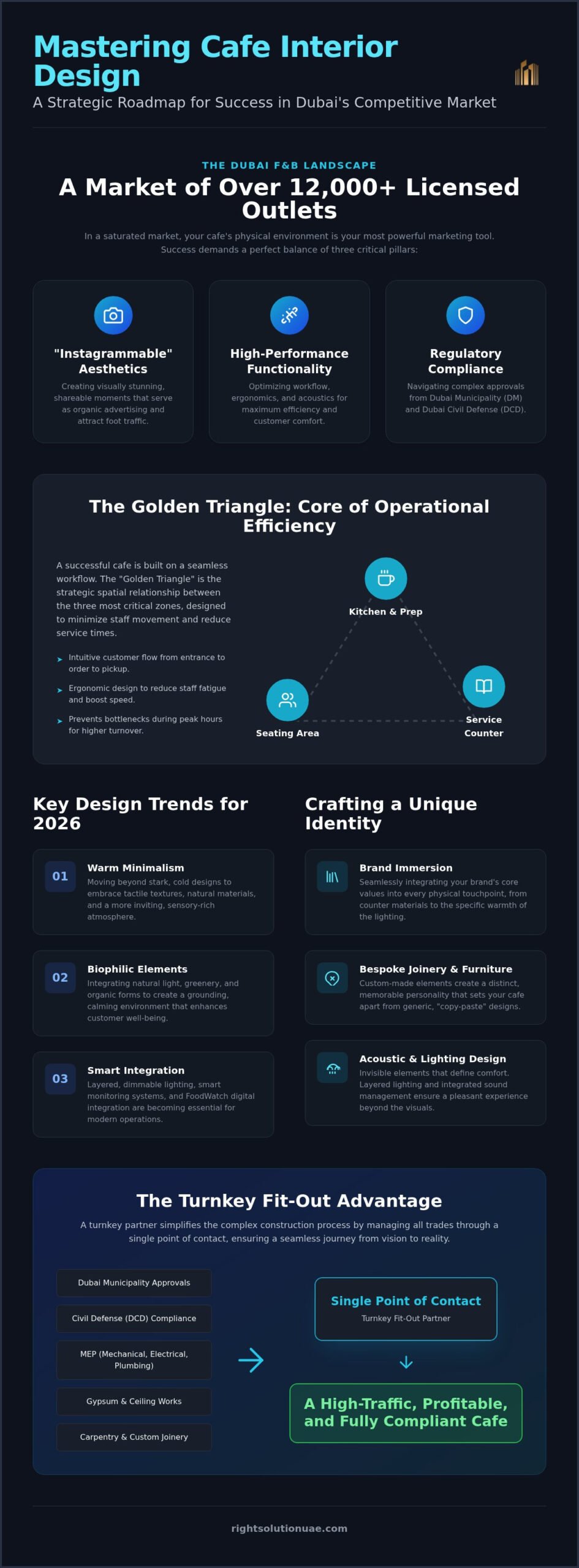
With more than 12,000 licensed food outlets currently competing for attention across the emirate, your brand’s physical environment is no longer just a backdrop; it’s your most aggressive marketing tool. You likely recognize that a successful space requires a delicate harmony between “Instagrammable” moments and high-performance functionality, yet the reality of navigating complex Dubai Municipality and Dubai Civil Defense approvals often feels like a barrier to creativity. It’s a common frustration to fear that a visionary design might lead to operational bottlenecks or costly delays during the final handover process.
This article provides a professional roadmap to mastering cafe interior design Dubai in 2026, ensuring your space is as profitable as it is photogenic. You’ll discover how to balance iconic aesthetics with the technical rigor of updated fire safety mandates and FoodWatch digital integration. We will explore the shift toward warm minimalism, the necessity of 24/7 smart monitoring systems, and the strategic use of bespoke fit-outs to create an efficient kitchen and seating workflow that maximizes every square meter of your investment. By aligning your creative vision with local regulatory precision, you can transform a challenging renovation into a seamless path toward a high-traffic destination.
Key Takeaways
- Learn how to leverage sophisticated interior design as a silent marketing tool to capture attention in Dubai’s high-traffic F&B landscape.
- Discover the “Golden Triangle” of cafe interior design Dubai to optimize kitchen and seating workflows for maximum operational efficiency.
- Navigate the complexities of Dubai Municipality and Civil Defense approvals by integrating regulatory compliance into the initial design phase.
- Understand the role of bespoke joinery and customized furniture in creating a unique, high-end brand identity that resonates with local customers.
- Recognize how a turnkey fit-out partner simplifies the construction process by managing MEP, gypsum, and carpentry through a single point of contact.
The Strategic Impact of Cafe Interior Design in Dubai’s Market
In a city where visual excellence is the standard, your cafe’s entrance acts as a silent handshake. The psychology of a first impression in Dubai is unforgiving; customers often decide whether to stay based on the sensory pull of the foyer before they even view a menu. As Dubai’s economic landscape continues to diversify through tourism and trade, the F&B sector has become a high-stakes arena for brand identity. Effective cafe interior design Dubai isn’t merely about choosing a color palette; it’s a strategic deployment of architecture that functions as your most consistent marketing representative.
We’ve seen a fascinating evolution across the city’s key hubs. The industrial, raw aesthetics of Al Quoz have matured into sophisticated galleries, while the dense residential clusters of JLT demand layouts that transition from morning workspaces to evening social spots. In DIFC, the requirement shifts toward high-end, polished finishes that mirror the corporate sophistication of the district. By 2026, the cafe interior design Dubai market has moved beyond cold, stark minimalism toward sensory experiences that incorporate tactile textures, integrated lighting, and biophilic elements that ground the customer in a curated environment.
Design as a Driver of ROI
A well-executed layout directly impacts your bottom line by dictating the rhythm of the room. “Instagrammable” corners aren’t just for social media visibility; they serve as organic advertisements that reduce your digital marketing spend. However, true ROI comes from balancing these visual highlights with a floor plan that optimizes customer turnover. Strategic seating arrangements and clear pathways ensure that your staff can move efficiently, reducing service times during peak hours. When the atmosphere feels premium and intentional, customers are statistically more likely to increase their average spend, viewing the visit as an event rather than a simple transaction.
Competitive Benchmarking in Dubai
Success in the UAE market requires a deep understanding of what your neighbors are doing without falling into the “copy-paste” trap. Dubai’s diners are sophisticated and easily spot generic designs that lack soul. Benchmarking involves analyzing the flow and materiality of high-performing concepts and then injecting a bespoke identity that sets your brand apart. We define Brand Immersion as the seamless integration of a cafe’s core values into every physical touchpoint, from the weight of the custom-made counters to the specific warmth of the lighting. This level of detail ensures your space isn’t just another outlet but a destination with a distinct, memorable personality.
Balancing Visual Appeal with Operational Efficiency
A stunning interior attracts a customer once. However, a seamless experience is what ensures they return for a second visit. In the context of cafe interior design Dubai, the most successful venues are those that treat operational efficiency as the foundation of their aesthetic. We focus on the “Golden Triangle”—the precise spatial relationship between the kitchen, the service counter, and the seating area. If these three zones aren’t logically connected, you risk staff collisions and frustrated patrons. Ergonomics play a vital role here. By positioning equipment to minimize steps for baristas, you significantly reduce service time during peak hours.
Acoustics and lighting are the invisible elements that define cafe comfort. While a space might look beautiful in a photograph, poor sound management can make it impossible for guests to hold a conversation. We integrate acoustic treatments within gypsum work or decorative wall panels to prevent the room from becoming an echo chamber. Similarly, lighting must be layered. Task lighting is essential for the workspace, while ambient, dimmable fixtures create the necessary warmth for the dining area. Balancing these technical needs with your visual goals is the hallmark of a professional fit-out.
The Workflow-First Approach
The barista station is the heart of the modern cafe. It must be optimized for both speed and showmanship, allowing the coffee-making process to be a visual draw without slowing down the queue. Customer flow should move intuitively from the entrance to the order point, then to a designated pickup zone. This prevents the “order bottleneck” that often plagues smaller footprints. Effective storage solutions and hidden waste management systems are essential to maintain a clean, high-end appearance. For owners who want to avoid the stress of coordinating these complex details, choosing a partner who offers comprehensive MEP and fit-out services can prevent costly operational bottlenecks.
Technical MEP Integration for F&B
Integrating MEP (Mechanical, Electrical, and Plumbing) services is where many projects face delays. Open kitchens require specialized ventilation and extraction systems that comply with the updated DCD kitchen hood suppression requirements implemented in early 2026. Plumbing must be planned for commercial espresso machines that require direct water lines and drainage, alongside high-temperature dishwashers. Additionally, electrical load planning is non-negotiable for high-powered kitchen equipment. Following Dubai Municipality regulations ensures that these technical systems meet health and safety standards from the start, protecting your investment from future compliance issues.
Navigating Dubai’s Regulatory Landscape: DM, DCD, and Landlords
Successful cafe projects in Dubai don’t begin at the drawing board; they begin with the rulebook. In a city where regulatory standards are both rigorous and dynamic, treating compliance as an afterthought is a recipe for operational delays and financial penalties. Integrating cafe interior design Dubai with the requirements of Dubai Municipality (DM) and Dubai Civil Defense (DCD) from the initial concept ensures that your vision is buildable. Whether you’re securing a No Objection Certificate (NOC) from major developers like Emaar or Nakheel, or ensuring your kitchen layout meets DM Health and Safety codes, early alignment is essential.
The role of Dubai Municipality extends beyond simple hygiene. Their Food Code 2.0 dictates specific spatial requirements for food preparation, storage, and waste management. Simultaneously, DCD enforces strict fire safety mandates that were updated in the first quarter of 2026, including new specifications for kitchen hood suppression systems. Operating without a DCD Completion Certificate now carries a starting fine of AED 5,000, making technical precision a non-negotiable part of your project’s success.
The Approval Roadmap for 2026
The path to opening your doors follows a structured sequence that requires meticulous documentation. We manage this process through three primary stages:
- Step 1: Initial Design and Landlord Approval. Before government bodies review your plans, your landlord or developer must issue an NOC. This confirms your design aligns with the building’s aesthetic and structural guidelines.
- Step 2: Technical Approvals. Plans are submitted to DM for health and safety clearance and to DCD for fire safety systems. As of 2026, all premises must also be connected to a DCD-approved 24/7 smart monitoring station, with annual contracts ranging from AED 1,200 to AED 2,400.
- Step 3: Final Inspection. Once the fit-out is complete, authorities conduct on-site inspections to verify that the build matches the approved drawings before issuing the Fit-out Completion Certificate.
Avoiding Common Compliance Pitfalls
Material selection is a frequent area where designs fail inspection. All interior finishes, from wall claddings to upholstery, must meet specific fire-rating standards. In the kitchen, grease trap requirements are strictly enforced based on the volume of food production; failing to account for proper kitchen drainage can lead to immediate layout rejections. Finally, don’t overlook accessibility. UAE law requires that all public spaces, including cafes, meet specific standards for people of determination, ensuring inclusive access through ramp gradients, door widths, and counter heights.
Custom Joinery and Furniture: Crafting a Unique Identity
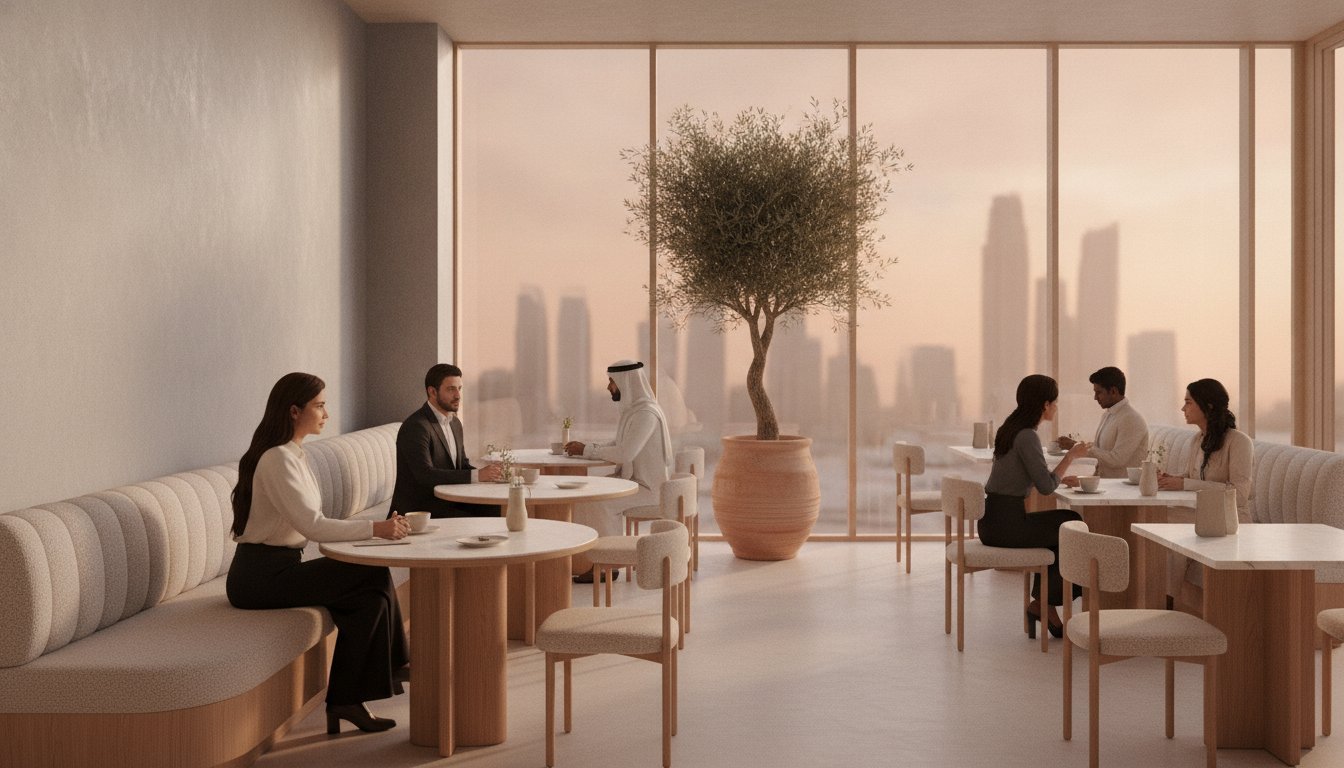
In the competitive landscape of 2026, off-the-shelf furniture rarely meets the exacting standards of the luxury Dubai market. Standardized pieces often leave awkward gaps in a floor plan, wasting valuable square footage in high-rent districts. To achieve a truly iconic brand identity, cafe interior design Dubai must lean heavily on custom joinery. Bespoke elements allow you to tailor every banquet seat and counter to the specific dimensions of your space, ensuring that your layout is both visually harmonious and operationally efficient. This customized approach ensures that your furniture isn’t just a place to sit, but a strategic extension of your brand’s narrative.
Bespoke Elements That Define a Cafe
The “Hero” counter serves as the functional and aesthetic anchor of any successful cafe. It’s the primary point of contact for your customers, and its design should reflect the meticulous craftsmanship of your brand. Beyond the main service area, integrated shelving and display units offer subtle opportunities for retail cross-selling, turning functional storage into a curated gallery for your products. For spaces that cater to a remote-working crowd or those seeking quiet conversation, custom wooden doors and partition work can create secluded nooks without compromising the open-plan feel. These handcrafted details transform a generic commercial unit into a destination with a distinct personality.
Durability in High-Traffic Environments
Dubai’s climate and the heavy usage of commercial spaces demand materials that offer both elegance and resilience. Selecting commercial-grade fabrics and finishes is vital; they must withstand constant cleaning and high footfall while maintaining their sensory appeal. In food and beverage environments, easy-clean surfaces are a regulatory necessity that shouldn’t come at the cost of style. The longevity of handcrafted joinery far exceeds that of mass-produced items, as bespoke pieces are engineered to withstand the specific environmental stressors and usage patterns of a high-traffic cafe. This durability ensures that your investment retains its “day one” polish for years to come.
Since 2005, we’ve focused on the art of spatial transformation through our in-house custom furniture manufacturing. Our team understands that a cafe’s identity is built on these tactile touchpoints, from the texture of a wooden door to the ergonomics of a banquet seat. By managing the entire carpentry process ourselves, we ensure that the final product matches the initial vision with absolute precision. If you’re ready to elevate your brand identity with bespoke craftsmanship, view our custom furniture and joinery services to see how we bring unique concepts to life.
Executing Your Vision: The Turnkey Fit-Out Advantage
Transitioning from a sophisticated design concept to a physical, operational space is the most critical phase of any project. In the competitive world of cafe interior design Dubai, a turnkey approach isn’t just a convenience; it’s a vital risk mitigation strategy. By consolidating all responsibilities under a single point of contact, you eliminate the fragmented communication that often leads to costly delays. This unified oversight ensures that every technical detail, from the structural integrity of the gypsum work to the precision of the MEP installations, aligns perfectly with the original vision.
Managing a renovation involves a complex choreography of specialized trades. When these services are managed in isolation, the risk of “design drift” increases. A turnkey partner provides a cohesive bridge between the visionary and the technical, ensuring that the final paint work and finishing touches reflect the high-end quality your brand demands. This methodical approach allows you to move through the construction phase with confidence, knowing that the project is being steered by a team that values both the emotional and functional impact of the physical environment.
The Benefits of End-to-End Management
Consolidating design and build services significantly reduces the frequency of variation orders. When the team executing the fit-out is the same one that developed the technical drawings, there’s a deeper understanding of the project’s requirements. This leads to more transparent budgeting and streamlined procurement strategies. For fast-track cafe fit-outs, timeline management is non-negotiable. A managed workflow allows for the overlapping of trades, such as starting carpentry work while MEP systems are being finalized, which accelerates the path to your grand opening without compromising on the “Right Solution” standard of excellence.
Partnering with Experience Since 2005
Local knowledge is your most valuable asset when navigating Dubai’s contracting sector. Since 2005, we’ve established a deep-rooted presence in the UAE, transforming empty commercial shells into some of the city’s most thriving cafes. Our two decades of experience allow us to anticipate potential bottlenecks and provide proactive solutions that keep your project on track. We don’t just act as a contractor; we function as a visionary partner and a curator of environments. If you’re ready to bring your concept to life with a team that prioritizes craftsmanship and reliability, start your cafe transformation with Right Solution UAE and experience a seamless transition from concept to completion.
Transforming Your Cafe Vision into a Dubai Landmark
Building a successful venue in this competitive market requires a sophisticated blend of iconic aesthetics and technical precision. We’ve explored how cafe interior design Dubai serves as a powerful marketing tool while demanding strict adherence to 2026’s updated safety and health regulations. From the “Golden Triangle” of workflow efficiency to the exclusivity of bespoke joinery, every element must work in concert to ensure high footfall and operational longevity. A well-designed space doesn’t just attract customers; it sustains a profitable business model through intelligent layout and reliable infrastructure.
Since 2005, our team has functioned as a visionary partner for F&B owners across the emirate. Our in-house custom furniture factory and comprehensive MEP management simplify the complex approval process, making your journey from an empty shell to a grand opening both seamless and rewarding. You don’t have to navigate the technicalities of DM and DCD approvals alone. By partnering with established experts, you ensure your investment is protected by decades of local experience and a meticulous commitment to quality.
Consult with Dubai’s Cafe Fit-Out Experts Today to begin your transformation. We’re ready to help you curate an environment that captivates your audience and stands the test of time in this vibrant global hub. Your journey toward a high-traffic, profitable cafe starts with a single, well-planned step.
Frequently Asked Questions
How much does cafe interior design cost per square foot in Dubai?
The investment for cafe interior design Dubai varies based on the level of luxury and technical complexity required. While industry benchmarks exist, we provide tailored quotes based on specific project scopes to ensure accuracy. Factors influencing the final cost include the choice of materials, the scale of MEP installations, and the extent of custom joinery. Engaging a consultant early helps in establishing a realistic budget that aligns with your brand’s aesthetic and operational goals.
How long does the typical cafe fit-out process take in the UAE?
A typical cafe fit-out in Dubai generally takes between four and nine months from the initial brief to the grand opening. This duration accounts for design development, landlord approvals, and the technical inspections required by local authorities. Fast-track projects are possible through methodical planning and end-to-end management. We prioritize a structured schedule to minimize downtime, ensuring that your space is operational and generating revenue as quickly as possible.
Do I need a separate MEP contractor for my cafe renovation?
It’s often more efficient to work with a turnkey partner who handles MEP work in-house rather than hiring separate contractors. Managing MEP services alongside the interior fit-out prevents coordination errors and reduces the risk of project delays. A unified team ensures that electrical, plumbing, and ventilation systems are seamlessly integrated into the architectural design. This comprehensive approach simplifies communication and provides a single point of accountability for your renovation project.
What are the essential Dubai Municipality requirements for cafe kitchens?
Dubai Municipality requirements focus on food safety, hygiene, and spatial flow within the kitchen. Essential standards include the use of non-porous, easy-to-clean surfaces and the installation of grease traps that match your production volume. Layouts must prevent cross-contamination by clearly separating raw and cooked food zones. Compliance with Food Code 2.0 and registration on the FoodWatch platform are mandatory for all licensed food establishments to ensure ongoing health and safety standards.
Can I use custom furniture for a small cafe space?
Custom furniture is the most effective solution for small cafe footprints. Unlike off-the-shelf pieces, bespoke joinery and banquet seating are designed to the exact dimensions of your space, eliminating wasted gaps and maximizing seating capacity. Our in-house manufacturing facility allows us to create multi-functional pieces that serve as both storage and decor. This tailored approach ensures that even the most compact unit feels spacious, organized, and perfectly aligned with your brand identity.
How do I get DCD approval for my cafe interior design?
Securing Dubai Civil Defense approval requires submitting detailed fire safety plans that comply with 2026 mandates. These plans must specify smoke detectors, heat sensors, and kitchen suppression systems. Once the design is approved, a certified contractor executes the installation. The process concludes with a final on-site inspection to verify all systems are operational before the Fit-out Completion Certificate is issued. This methodical path protects your business from significant fines and ensures guest safety.
What is the difference between shell and core and a turnkey fit-out?
A shell and core unit is a basic structure with no interior finishes or MEP systems, whereas a turnkey fit-out provides a fully completed, ready-to-operate space. Choosing a turnkey solution means your contractor manages everything from gypsum work and flooring to complex MEP and paint work. This end-to-end service is ideal for cafe owners who prefer a single point of contact. It ensures that the final build matches the original design concept with absolute precision.
Why should I choose a fit-out company with 20+ years of experience?
Partnering with a company established in 2005 provides you with deep-rooted local knowledge and a proven track record in the UAE’s contracting sector. Two decades of experience mean we’ve successfully navigated countless regulatory changes and complex approval processes for major developers. This longevity suggests a high level of reliability and craftsmanship. It ensures that your project is managed by experts who understand the nuances of the cafe interior design Dubai market and are committed to delivering a premium outcome.