
A premium B2B furniture order depends on more than a refined design. In Dubai, furniture manufacturers serve custom residential and commercial projects by turning project specifications into made-to-measure pieces and coordinating production and delivery around the brief. The right fit comes from aligning the design, materials, quantities and site requirements from the outset.
For developers, hospitality teams and businesses, consistency across an order matters as much as the look of each piece. This guide explains how furniture manufacturers plan custom projects for homes, offices, hotels and other commercial spaces, what shapes the ordering process, and how UAE manufacturers can support export markets. It also covers how to match furniture to a project’s function, environment and scale, including outdoor settings. A clear view of the process helps you decide whether custom manufacturing suits your project.
Key Takeaways
- Match furniture dimensions and function to the space, whether you’re fitting out a home, office, hotel or other commercial setting.
- Align design intent, material choices and finish requirements before production to keep a large order cohesive.
- Plan delivery and installation around site access, project sequencing and the readiness of each space.
- Compare suppliers by how clearly they handle specifications, quantities, production coordination and delivery requirements.
- For export orders, account for the destination market and consider how climate, maintenance needs and order quantities shape outdoor furniture choices.
Custom furniture for homes, offices, hotels, and other commercial spaces
Custom furniture manufacturers in the UAE handle design and orders by turning a project brief into agreed dimensions, materials, finishes, quantities and delivery requirements. Clear drawings and written approval help keep the final pieces aligned with the intended space.
Custom Design and Material Choices
Start with the room’s use, dimensions and design, then choose suitable materials and finishes. A luxury hotel lobby may need a distinctive reception counter, while a home office needs a desk designed around its layout. Compare samples for colour, texture and finish, and record each choice against the relevant item in the specification.
Customisation and Project Support
Project support involves coordinating the brief, approved design, order details and revisions. Before production, decide who can approve changes and how updated drawings or specifications will be recorded. Changing a cabinet’s dimensions, for example, can affect its fit and relationship to neighbouring pieces. A shared, current schedule helps the project team work from the same decisions.
Requirements differ by setting. A residence may need a dining table sized for a particular room, while an office may need matching desks and storage across several work areas. Hotels and other commercial spaces often require consistent finishes across guest rooms, reception areas and shared spaces. Organize the specification by room or zone to keep quantities and finishes clear.
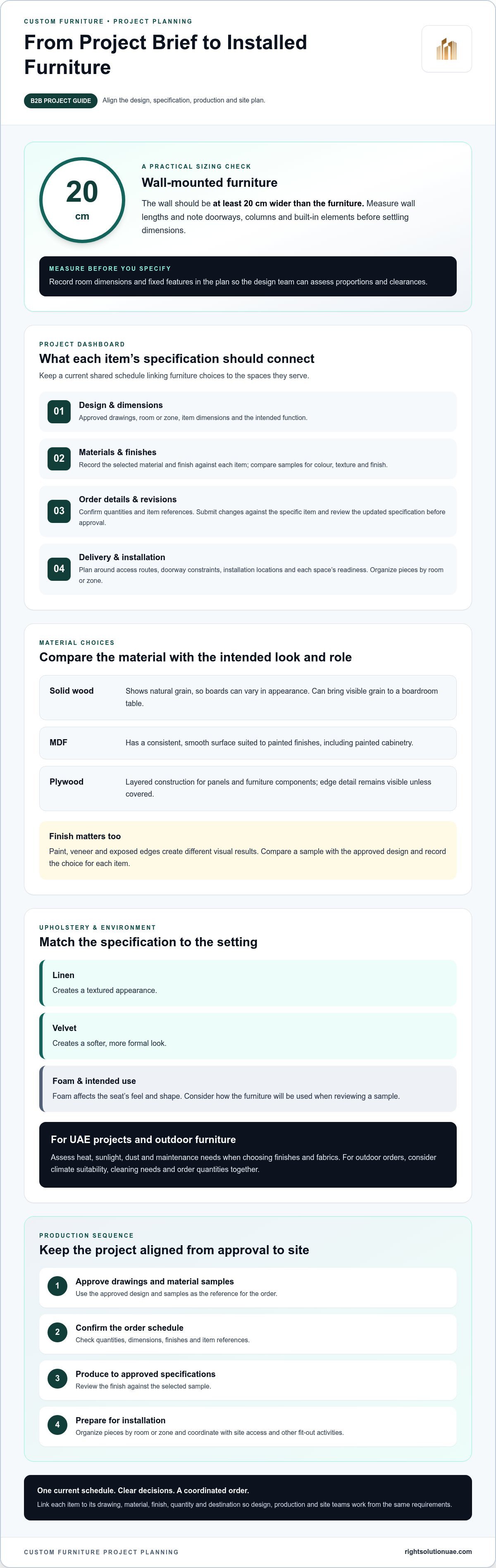
Measure the room and note fixed features before settling dimensions. Include wall lengths, doorways, columns and the position of built-in elements in the plan. For a wall-mounted piece, the wall should be at least 20 cm wider than the furniture. This gives the design team a practical starting point for assessing proportions and clearances.
Custom and bespoke furniture both describe pieces designed for a project rather than chosen solely from standard dimensions. A bespoke headboard, for example, can be shaped to suit a bedroom’s layout and style. Define what needs to be unique, such as dimensions or finish, and what can remain consistent across repeated items.
Record order changes clearly. Submit each revision against the specific item, describe the adjustment and review the updated specification before approval. Changing an upholstery colour is different from changing a sofa’s overall dimensions. Keeping decisions distinct makes the current order requirements easier to understand.
Customer support is most useful when it addresses a specific project question. Gather the item reference, room location, approved drawing and requested change. A project manager reviewing several office desks, for example, can identify the affected units without changing the wider order. This gives design and production teams a precise basis for responding.
Looking for Premium B2B Furniture Solutions?
Premium B2B furniture solutions begin with a coordinated design brief. For a hotel reception, that brief can specify counter dimensions, guest circulation, finish samples and service access. The design team can then translate those needs into drawings and an item schedule. This gives procurement, production and site teams a shared reference before fabrication begins.
Choose materials to suit both the interior concept and each item’s role. Solid wood can bring visible grain to a boardroom table, while MDF offers a smooth base for painted cabinetry. Plywood provides layered construction for panels and furniture components. Specify the finish as well as the material, since paint, veneer and exposed edges create different visual results.
Frame materials have different characteristics. Solid wood shows natural grain, so boards can vary in appearance. MDF has a consistent surface suited to painted finishes, while plywood’s layered construction leaves visible edge detail unless it is covered. Compare a sample with the approved design, and record the material and finish for every item.
Upholstery also calls for project-specific choices. Linen gives seating a textured appearance, while velvet creates a softer, more formal look. Foam affects the seat’s feel and shape, so consider the intended use when reviewing a sample. A hotel lobby lounge chair may need a different upholstery specification from a decorative seat in a private suite.
For UAE projects, consider heat, sunlight, dust and maintenance when choosing finishes and fabrics. A sunlit lounge may expose upholstery to stronger light than an interior meeting room. Outdoor furniture buyers should assess climate suitability, cleaning needs and order quantities together. These criteria help teams compare materials on practical performance, not appearance alone.
A clear production sequence reduces misunderstandings. First, approve drawings and material samples. Then confirm quantities, dimensions, finishes and item references in the order schedule. Production can follow the approved specifications, with the finish reviewed against the selected sample. Before installation, organize pieces by room or zone, such as guest rooms, corridors and reception areas.
Plan installation around access routes and the finished condition of each space. A large conference table, for example, may require a delivery route that accommodates its assembled dimensions. Record site measurements, doorway constraints and installation locations in the project plan. This helps coordinate furniture placement with the interior fit-out and other site activities.
For a premium collection, consistency depends on tracking decisions through design, production and installation. Maintain one current schedule linking each item to its drawing, material, finish and destination. If a finish changes, update the item record before production proceeds. This control makes custom furniture easier to coordinate across a commercial project.
Furniture manufacturing and project delivery in Dubai and the UAE
For a UAE project, delivery planning starts with approved specifications and the site schedule. Product requirements, access conditions and installation scope shape the handover plan.
Delivery, Installation, and After-Sales Service
Set out delivery, installation and after-sales responsibilities in the order documents. Identify whether handover includes placement, assembly, packaging removal or adjustments. Record the delivery location and access constraints for each zone, such as a hotel lobby or office floor. This makes the intended scope clear to the project team.
After installation, record outstanding adjustments against the item reference and room location. For example, log an unevenly fitting dining table with its position and the issue observed. Keep approved drawings and delivery records together so follow-up relates to the exact piece and agreed specification.
Production and Delivery Timelines
Production timing depends on the approved design, material availability, order quantity, finishing sequence and installation requirements. A coordinated order schedule should identify which pieces are needed first. Reception furniture, for example, may be needed before office tables if the opening sequence prioritizes the front-of-house area.
Map each production stage to the project programme: design approval, material selection, fabrication, finishing, delivery and installation. A late finish approval can affect later work, while a confirmed site-readiness date helps organize delivery. Keep revisions visible in the schedule so the production team and site coordinator use the same current information.
Certifications and Safety Standards
There is no single certification that applies to every furniture category in the UAE. Relevant safety criteria depend on the product type, intended use and project specification. A seating item, for example, has different performance considerations from a decorative cabinet.
Set relevant criteria in the project documents and match any supporting test documentation to the specified furniture. Distinguish product-performance evidence from a company’s management certification, as they address different matters. This gives procurement teams a clearer basis for assessing compliance without treating one certificate as proof for every item.
Record delivery charges and any free-delivery threshold in the written order terms. Check how the terms address multiple delivery locations, phased drops and installation, since a large project may arrive in several shipments. List each destination and delivery phase to clarify the commercial arrangement.
The total price depends on the project and is provided after a quote request; delivery distance, order volume, installation scope and finishing requirements all affect it. For a UAE office fit-out, for example, the quote should distinguish furniture production from delivery and on-site work. That breakdown helps the team compare the scope with its project budget.
Before dispatch, align the item schedule with site readiness. Confirm that the receiving area, access route and installation location are ready for the furniture. Meeting-room tables may need a different placement sequence from reception seating. Clear room labels help teams direct each piece correctly across a project in the United Arab Emirates.
Supplier selection and order requirements
Choose a supplier whose production approach matches the project specifications. A written order schedule makes quantities, finishes and delivery destinations easier to manage.
Start supplier selection with the project documents. Compare each proposal against the drawings, item schedule, materials, finishes and installation scope. An office order, for example, may include desks, storage units and meeting tables with different dimensions and quantities. Request one consolidated schedule showing how the proposed items match the requirements.
Before approving an order, make sure it records:
- Item references, dimensions and quantities for each room or zone.
- Materials, finishes and upholstery selections attached to the relevant items.
- Approved drawings and the process for recording design changes.
- Delivery locations, installation scope and the project sequence.
- Payment terms, order amendments and any applicable delivery charges.
Bulk Orders and Scalable Production
Bulk orders need a clear distinction between repeated items and custom variations. A hotel project may use the same bedside unit across guest rooms while specifying different furniture for reception areas. Separate shared specifications from room-specific requirements, then confirm how the supplier will group production and identify each item for delivery.
Scalable production also depends on managing changes across the full order. If a finish changes, identify every affected item before revising the schedule. Record the approved version and share it with procurement, production and site teams. This helps prevent an earlier specification from being used for part of a larger order.
UAE-Made and Made-to-Order Furniture
For UAE-made furniture, distinguish the place of manufacture from the origin of individual materials or components. Ask for order documents identifying the production location and describing the work performed there. This gives project teams a clearer understanding of what “UAE-made” means for their order.
Made-to-order furniture is produced to project requirements rather than selected solely from standard catalogue dimensions. A custom reception desk, for instance, can be specified to fit a particular counter layout. Confirm dimensions, finish, quantity and approval drawings before production, then keep the final specification with the purchase order.
Evaluate the proposed factory process against the project’s actual needs, not just sample pieces. A home furniture order may involve a limited range of items, while a commercial project can require coordinated production across several spaces. Review how the schedule links each item to its approved specification and delivery destination.
Clarify order changes before signing. State who can approve revisions, how they must be documented and which schedule is authoritative. A revised wardrobe dimension, for example, should appear on the approved drawing and item schedule. This creates a traceable record for procurement and production while keeping the selection aligned with the project brief.
Export markets and manufacturing capabilities
Export readiness depends on matching production capacity to destination requirements. For a UAE buyer serving overseas projects, start by identifying the destination, furniture categories, quantities and delivery sequence. A living-room collection, for example, may combine sofas, tables and storage pieces, each with different dimensions, finishes and packing needs. This item-level view helps define the manufacturing brief.
Assess capability by considering the product range and the work required for each piece. Upholstered seating may involve different production processes from cabinetry or dining tables. Ask how the factory organizes these categories, controls finish consistency and records approved specifications. For a multi-property order, check that repeated pieces can be identified by project, room or destination.
Export planning starts with a complete specification. Include drawings, materials, finishes, quantities, packaging expectations and delivery destinations. Then align those details with the order schedule and destination documentation requirements. A hospitality project shipping guest-room furniture and lobby seating, for instance, should separate items by area and shipment phase. This makes it easier to track what is produced and prepared for each location.
Transport can influence design choices. Large assembled furniture may need different handling from flat-packed components, while delicate finishes need suitable protection during transit. Identify item dimensions and packaging format early, then consider how pieces will move from the factory to the receiving site. For an overseas living space, arrival order can also affect installation planning and room-completion timing.
Outdoor furniture buyers should assess whether the products suit the destination climate, maintenance needs and order quantities. A coastal hospitality project may require a different material and care plan from an indoor residential collection. Compare intended use, exposure conditions and cleaning routine with the proposed specification. The finish should deliver the required appearance while fitting the project’s practical maintenance plan.
Manufacturing capability also includes handling revisions without losing control of the export order. Keep one approved record linking each item to its drawing, material, finish and destination. If a client changes upholstery on selected lounge chairs, identify those units separately from the rest of the shipment. This helps avoid confusion between similar pieces intended for different rooms or markets.
Before committing to an export schedule, map the process from final approval through production, packing, dispatch and installation coordination. Assign responsibility for each handover, including who provides shipment documents and who receives the goods. The destination team should have matching item references and delivery instructions, especially when several spaces are completed in sequence.
For a UAE project requiring made-to-measure pieces, plan your customized furniture project around its intended use, finish requirements and delivery needs. A clear brief helps connect the design, production and destination requirements while preserving comfort and visual consistency across the collection.
Right Solution Contracting LLC: Interior & Exterior Fit-Out
Right Solution Contracting LLC can support projects where custom furniture is part of a wider interior or exterior fit-out. Its Interior & Exterior Fit-Out and Full Renovation services help coordinate furniture decisions with the surrounding space, while Customized Furniture covers pieces tailored to the project. Gypsum work can also contribute to the interior’s overall finish.
Consider this integrated approach when a residential or commercial project needs furniture and related fit-out work planned together. Coordinating custom cabinetry with a room renovation, for example, can help align dimensions, finishes and placement with the wider design. Share your project requirements with Right Solution Contracting LLC to discuss the scope.
To discuss your project, contact Right Solution Contracting LLC.
Shape the Next Stage of Your Project
Before moving from concept to procurement, define what success means for the finished space. Consider how each custom piece supports daily use and relates to the interior, and which decisions need to be settled before work begins. This gives your project team a clear basis for choosing furniture manufacturers and aligning the furniture with the broader scope.
For projects where furniture and fit-out decisions need to work together, Right Solution Contracting LLC offers Interior & Exterior Fit-Out, Full Renovation and Customized Furniture. These services support a considered approach to shaping residential or commercial spaces, guided by the project brief.
Bring your design direction, room requirements and priorities into the next conversation. Contact Right Solution Contracting LLC to discuss your project and explore a suitable way forward. A clear starting brief can help turn your vision into a space that feels purposeful, cohesive and ready for the way people use it.
Frequently Asked Questions
What types of furniture do manufacturers make?
Furniture manufacturers can produce residential, office, hospitality and other commercial furniture, including seating, tables, storage, beds, reception desks and cabinetry. Custom orders can adapt dimensions, materials and finishes to a particular layout or design brief. A hotel project, for example, might combine coordinated bedroom storage with distinctive lobby seating. The available range depends on the production scope, so define the required items by room, function and quantity.
Which furniture manufacturers serve Dubai, Abu Dhabi, and other UAE cities?
Furniture manufacturers serving Dubai may focus on specific local areas, while coverage elsewhere in the UAE varies. Right Solution Contracting LLC serves Dubai projects and offers customized furniture. For a project in Abu Dhabi or another city, location coverage matters when coordinating site measurements, delivery and installation. Include the project address in your initial brief so the provider can assess the location alongside the work required.
How can I compare furniture manufacturers by quality, materials, and warranties?
Compare suppliers using project-specific evidence, not appearance alone. Review a finished sample alongside its material specification, construction details and finish schedule. For warranty terms, compare coverage, duration, exclusions and the process for making a claim. A sample chair can help assess upholstery and finish against the approved specification, while written terms clarify responsibilities after delivery.
What is the process for ordering custom furniture from a manufacturer?
Ordering typically moves from a project brief to measurements, design drawings, material and finish selections, and a written order. The buyer then reviews and approves the specifications before production begins. For a custom wardrobe, the brief should identify its location, intended storage, dimensions and finish. Keep the approved drawing with the order record, and document later changes against the affected item to maintain a clear decision history.
What are the delivery, installation, and lead times for UAE furniture manufacturers?
Delivery and lead times depend on the approved design, material sourcing, order volume, production sequence, finishing and site readiness. Installation planning also depends on access routes and the condition of each space. Delivery to a completed office floor, for example, may follow a different sequence from furniture destined for rooms still undergoing fit-out. Coordinate the schedule with site milestones so pieces arrive when receiving areas are ready.
What risks should buyers consider when choosing a furniture manufacturer?
Common project risks include unclear specifications, undocumented revisions, inconsistent finishes across an order and delivery plans that overlook site access. A mismatch between drawings and the final order can affect fit, particularly for built-in pieces. Reduce ambiguity by keeping one approved item schedule, recording changes in writing and linking each item to its drawing, finish and destination. These controls make responsibilities and project decisions easier to follow.